Technology for a sustainable future How to use a thermistor or Circuit Diagram Learn how to use an analog thermistor to measure temperature on the Arduino. Output readings to an LCD or the serial monitor in Celsius or Fahrenheit.

A thermistor exhibits resistance with higher sensitivity to temperature compared to other types of resistors. Using an Arduino, we can measure and process the thermistor's readings and then convert them into more common temperature units.

Temperature Sensor Circuit using Thermistor Circuit Diagram
Design Notes: For temperature sensing using an NTC thermistor, the resistor, R1, is chosen based on the temperature range and the NTC's value.

Learn how to integrate thermistors with ESP32 to create accurate temperature measurement systems. This guide explains how thermistors work, their types, and how to use them in your projects for precise temperature sensing. A thermistor is a thermal resistor - a resistor that changes its resistance with temperature. Technically, all resistors are thermistors - their resistance changes slightly with temperature - but the change is usually very very small and difficult to measure. Thermistors are made so that the resistance changes drastically with temperature so that it can be 100 ohms or more of change per degree
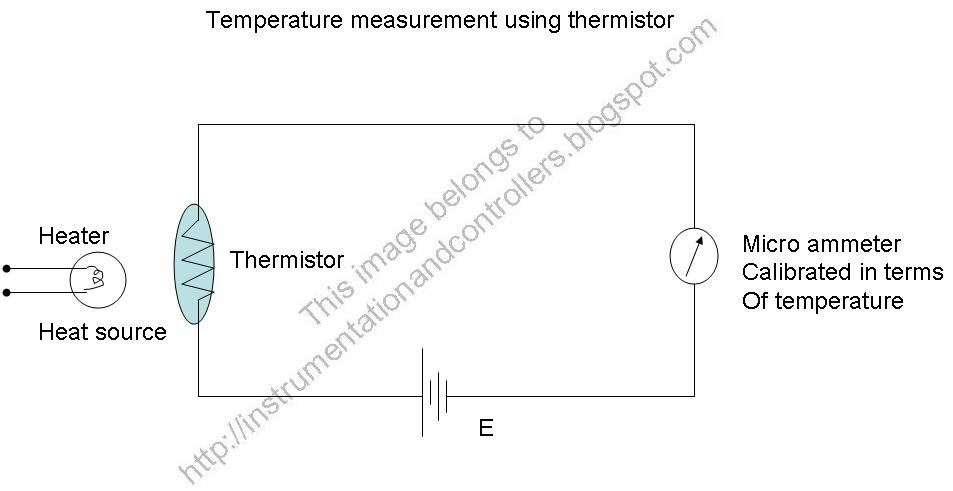
Make an Arduino Temperature Sensor (Thermistor Tutorial) Circuit Diagram
In addition to the evaluation board, TI also has a downloadable Thermistor Design Tool which offers complete resistance vs. temperature table (R-T table) computation, other helpful methods to derive temperature, and example C-code. Conclusion Thermistors are widely used, easy to connect, versatile sensors for measuring temperature.
![[VIDEO] How to Make a Temperature Sensor with an Arduino and a ... Circuit Diagram](https://www.circuitbasics.com/wp-content/uploads/2015/10/How-to-Make-a-Temperature-Sensor-with-an-Arduino-and-a-Thermistor.png)